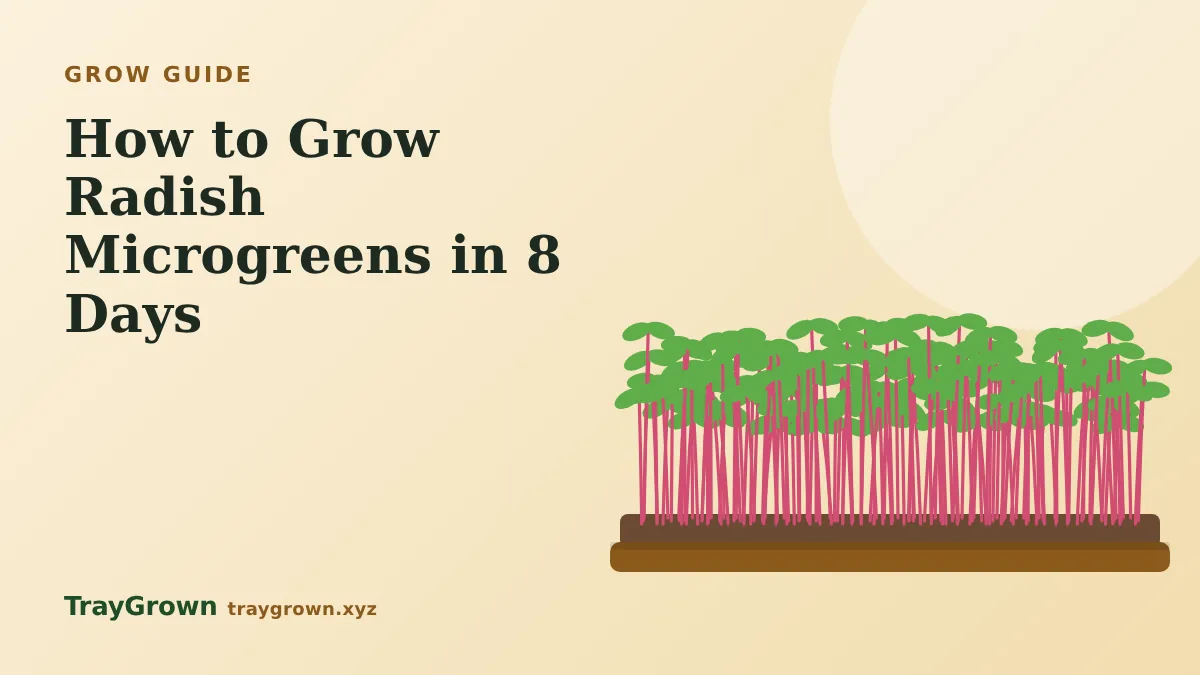
Radish microgreens are the fastest, most forgiving microgreen you can grow. The seeds sprout within 24–48 hours, the tray is ready in 7–12 days, and the result is a crisp, peppery green with pink, purple or white stems. If you are growing microgreens for the first time, start here.
Radish microgreens at a glance
| Seed per 10×20 tray | 25–35 g (about 1 oz) |
| Soak | Not needed |
| Germination | 1–2 days |
| Blackout | About 3 days |
| Light | 12–16 hours a day |
| Harvest | 7–12 days, 2–3 inches tall |
| Flavor | Peppery, like a mild radish |
Best radish varieties for microgreens
| Variety | Stem color | Notes |
|---|---|---|
| China Rose | Pink-red | Very common, reliable and fast |
| Daikon | White/green | Mild, high yield |
| Rambo / Purple Sango | Deep purple | Striking color, slightly lower yield |
| Red Arrow / Hong Vit | Bright red stems, green leaves | Popular with chefs for color |
| Mixed “radish blend” | Mixed | Easy way to get color variety |
Any untreated radish seed sold for microgreens or sprouting works. Avoid treated garden seed.
Step 1: Prepare the tray
Fill a tray that has drainage holes with 1–1.5 inches of moist potting mix, seed-starting mix or coco coir. Radish also grows very well on hemp mats. Level the surface.
Step 2: Sow
For a 10×20 tray, use 25–35 g of seed (or scale with the seed calculator). Sprinkle it evenly so seeds are close together but not stacked, then press them lightly onto the surface. Mist well.
No soaking needed — radish germinates quickly as it is.
Step 3: Blackout (days 0–3)
Cover the tray with another tray, upside down, or stack a tray on top with light weight (a pound or two is plenty). Keep it at 65–75°F (18–24°C). Mist once a day if the surface looks dry.
By day 2 you will see white roots and tiny fuzzy root hairs everywhere. That fuzz is normal — it is not mold. Learn to tell them apart in mold vs root hairs.
Uncover on about day 3, when the seedlings are about an inch tall and lifting the cover.
Step 4: Light (day 3 onwards)
Put the tray under light for 12–16 hours a day. The pale yellow seedlings will turn green within a day, and colored varieties will develop pink or purple stems. Strong light deepens the color; see the grow light guide.
Step 5: Water from below
From day 3, bottom water about once a day: pour 1–2 cups of water into the solid tray underneath, let it soak for 10–15 minutes, then drain the excess. Radish is thirsty in the last few days before harvest. Full method: how to water microgreens.
Step 6: Harvest (days 7–12)
Radish microgreens are ready when the cotyledons are open and the tray is 2–3 inches tall, usually around day 8. Stop watering the day before, then cut about ½ inch above the soil.
Harvest timing changes the flavor:
| Harvest day | Flavor and texture |
|---|---|
| 6–7 | Mild, very tender, lower yield |
| 8–10 | Classic peppery flavor, crisp — the sweet spot |
| 11–14 | Hot and spicy; first true leaves appear; stems get stringy |
Troubleshooting radish microgreens
| Problem | Likely cause | Fix |
|---|---|---|
| Tall, thin seedlings falling over | Low light, or too much seed | Brighter light, closer; reduce seed by 20% |
| White fuzz on roots | Root hairs (normal) | Mist — root hairs collapse, mold doesn’t |
| Grey fuzz spreading on stems | Mold from poor airflow or over-watering | Fan, less water, thinner sowing |
| Leaves yellow after uncovering | Light too weak | More light; see yellow microgreens |
| Very spicy, tough tray | Harvested late | Cut around day 8 |
How to use radish microgreens
Use them anywhere you would use a little fresh radish or black pepper: on tacos, avocado toast, eggs, poke bowls, sandwiches and salads. Their color makes them a popular garnish. Store dry in the fridge for about 5–8 days — see how to store microgreens.
Frequently asked questions
Do I need to soak radish seeds?
No. Radish germinates quickly without soaking, and dry seed is easier to spread evenly.
Why are my radish microgreens so spicy?
They were probably harvested late, or grown warm. Harvest a day or two earlier for a milder taste.
Can I grow radish microgreens on a windowsill?
Yes. Turn the tray daily so the seedlings don’t lean towards the glass. Expect slightly taller, paler stems than under a grow light.